Leadership Isn't Personal · Chapter 7

The 5 Early
Signals of Drift

Drift doesn't announce itself. By the time you're reacting to a missed commitment or a blown deliverable, the drift started months ago. These five signals show up first, in the language people use, the questions they ask, and the exceptions they stop flagging. Catch them early and a light intervention works. Miss them, and you're using heavy force.
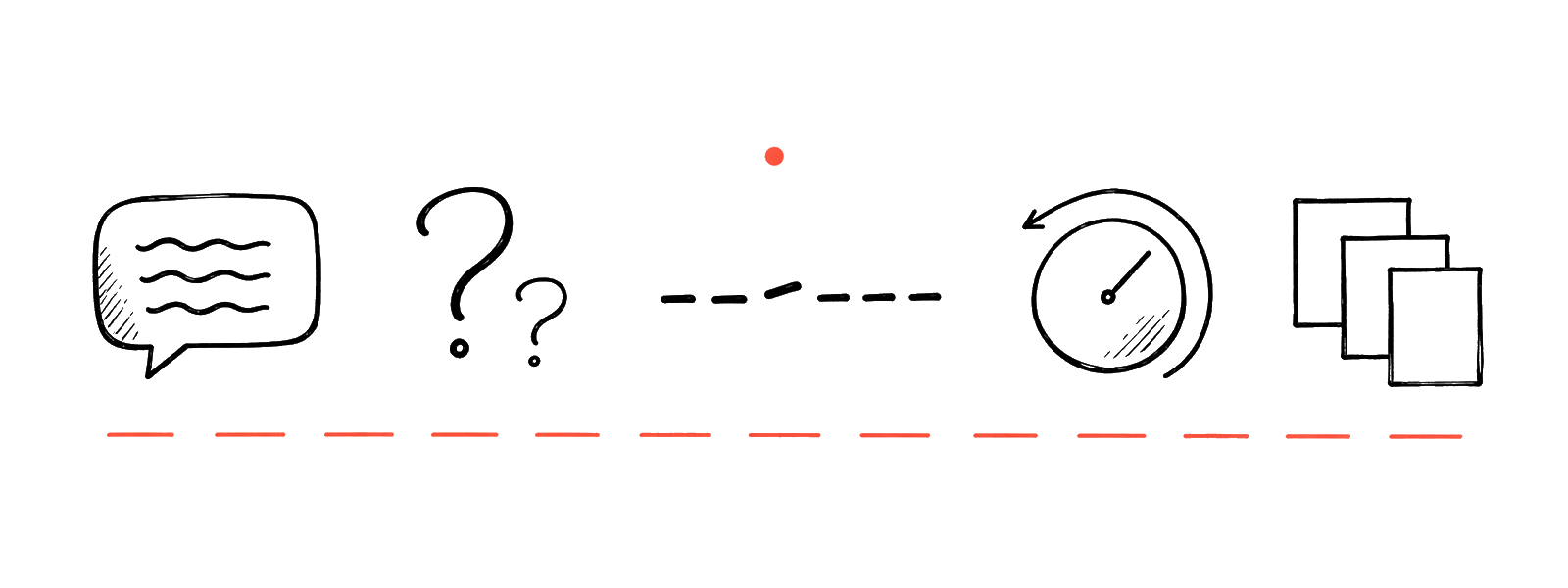
Five signal glyphs in a row
Hedging Shifting Normalized Retroactive Restated

How to use this card. Walk with it for a week. Listen for the five patterns in standups, status reviews, planning meetings, and one-on-ones. Note when you hear one — not to catch people, but to catch the system telling you something has already started to slip. A single signal is a prompt to pay attention. Two signals on the same standard is a prompt to act.

The Field Guide

Five signals, what they sound like, what to do.

1
Linguistic hedging
"We mostly got it." "We're kind of on schedule." "It's basically compliant."
MeansA standard that used to be clean is now partial. People are softening the language because they know the truth and don't want to say it flat.
DoAsk for the number. "Kind of on schedule" turns into "72% of commitments hit this month." Now you can work with it.
2
Shifting questions
Last month: "Did we hit compliance?" This month: "Did we get close?" Next month: "Is anyone getting hurt?"
MeansThe bar is moving down in real time. Each new question quietly redefines success at a lower level. Over a quarter, the original standard disappears.
DoRe-anchor. Put the original standard back in writing, in the same meeting, same cadence, same report. Say the number out loud every week.
3
Normalized exceptions
"That's just how this team does it." "Jim's group always works that way." "We handle it differently on that project."
MeansAn exception that was temporary has become policy-by-habit. Nobody decided it should be that way — it just hasn't been challenged in months.
DoSurface it. Write down the exception, the reason it started, and the conditions under which it expires. If none of those are true anymore, end it.
4
Retroactive compliance
Tasks marked closed on time — by being backdated. Reviews "completed" when no one was there to do them.
MeansPeople are hitting the metric by editing the record instead of doing the work. The system is rewarding the paperwork, not the outcome. This is the signal that predicts an incident.
DoChange what gets measured. Spot-check the work, not the paperwork. Make one random field verification a week, visibly, without warning.
5
Repeated restatements
You've said the same expectation three times in three different meetings, and it still isn't happening.
MeansThe words aren't the problem. The standard is clear. The system around it is not enforcing it — no signal, no consequence, no feedback path. Restating louder won't fix that.
DoStop restating. Find the missing input: who owns it, how is it measured, what happens when it slips. Fix that, then say it one more time.